Note
Access to this page requires authorization. You can try signing in or changing directories.
Access to this page requires authorization. You can try changing directories.
This article outlines the steps to create a SharePoint list connection.
Supported authentication types
The SharePoint list connector supports the following authentication types for copy and Dataflow Gen2 respectively.
| Authentication type | Copy | Dataflow Gen2 |
|---|---|---|
| Anonymous | n/a | √ |
| Windows | n/a | √ |
Set up your connection for Dataflow Gen2
You can connect Dataflow Gen2 in Microsoft Fabric to SharePoint list using Power Query connectors. Follow these steps to create your connection:
- Check capabilities to make sure your scenario is supported.
- Get data in Fabric.
- Connect to a SharePoint list.
Capabilities
- Site URL
Get data
To get data in Data Factory:
On the left side of Data Factory, select Workspaces.
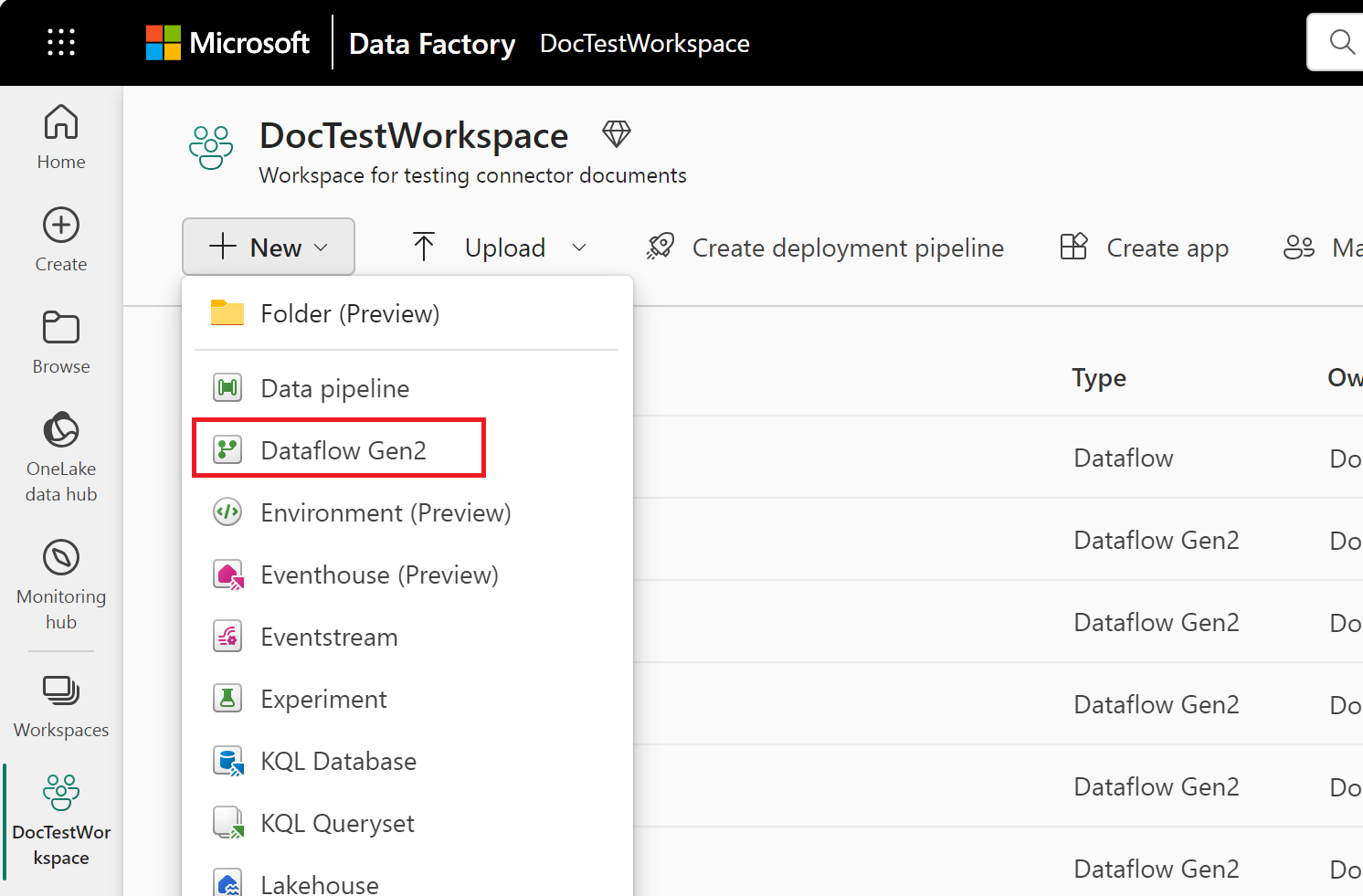
From your Data Factory workspace, select New > Dataflow Gen2 to create a new dataflow.
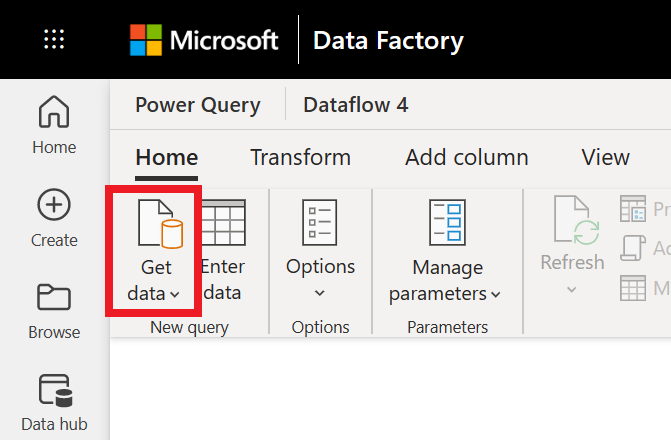
In Power Query, either select Get data in the ribbon or select Get data from another source in the current view.
In the Choose data source page, use Search to search for the name of the connector, or select View more on the right hand side the connector to see a list of all the connectors available in Power BI service.
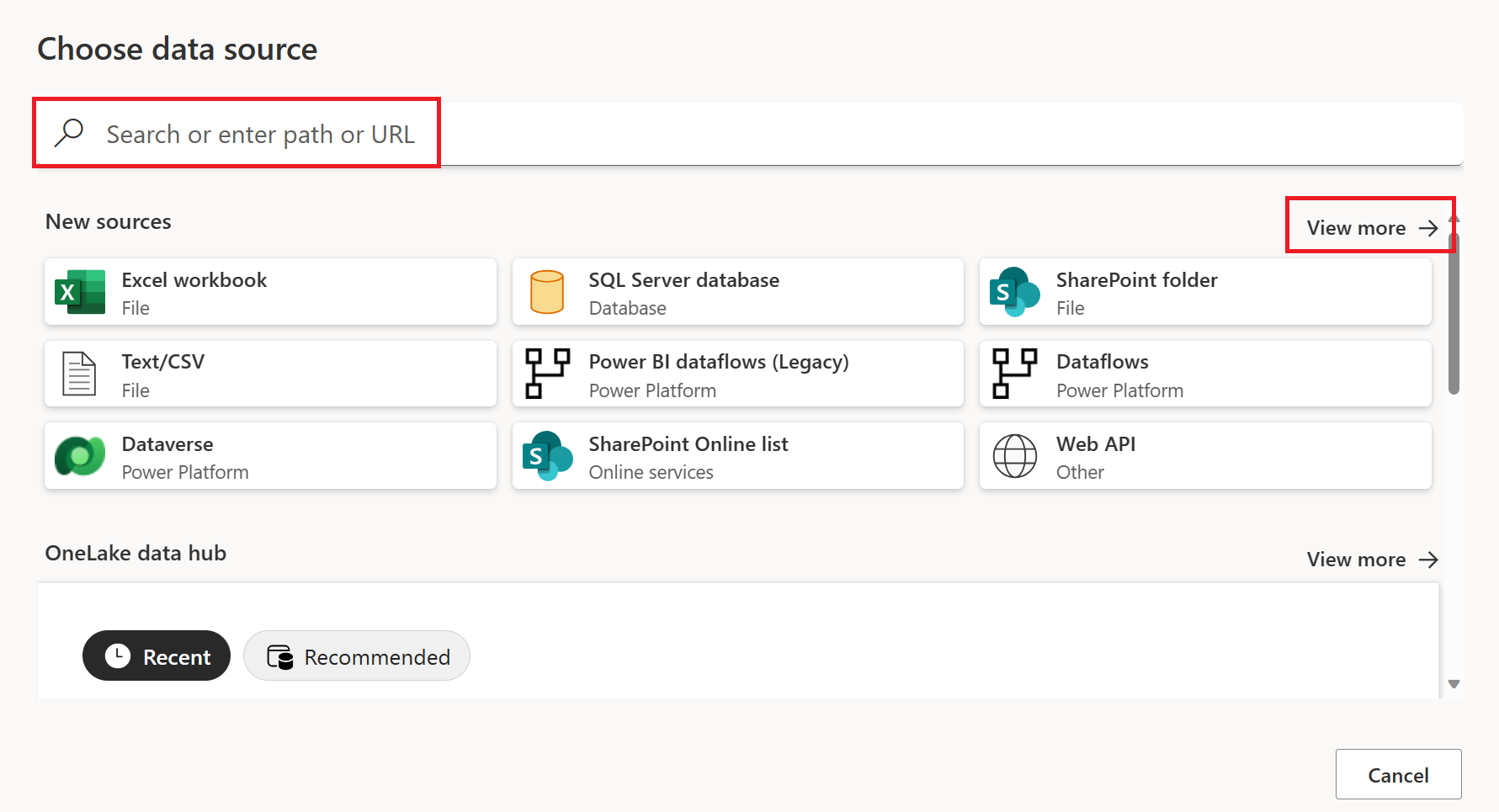
If you choose to view more connectors, you can still use Search to search for the name of the connector, or choose a category to see a list of connectors associated with that category.


Connect to a SharePoint list
To connect to a SharePoint list:
From the Data sources page, select SharePoint list. For more information, go to Where to get data.
If you have access to the SharePoint site picker, use it to locate and select the sites directly on the connection settings page. If not, copy the SharePoint site URL and paste it into the Site URL text box in the SharePoint list dialog box.

Enter the name of an on-premises data gateway if needed.
Select the authentication kind, and enter any credentials that are required.
Select Next.
From the Navigator, you can select a location, then transform the data in the Power Query editor by selecting Next.


Set up your connection in a pipeline
Data Factory in Microsoft Fabric doesn't currently support a SharePoint list in pipelines.